
WHAT TO VISIT IN TICINO
Tips for your trips out of town
Ticino: one of the richest cantons in history, tradition and culture. In this article we try to summarize the main points of interest of Ticino, from the fabulous castles to the most suggestive valleys of the canton. If you don’t know how to spend your summer days, these destinations are ideal for spending family moments with a comfortable trip out of town. For completeness we have selected several profiles of different destinations, so that we can satisfy both those who prefer to visit cities, castles or museums, and those who prefer destinations suitable for a simple day of relaxation.
In collaboration with Luganolake.info.
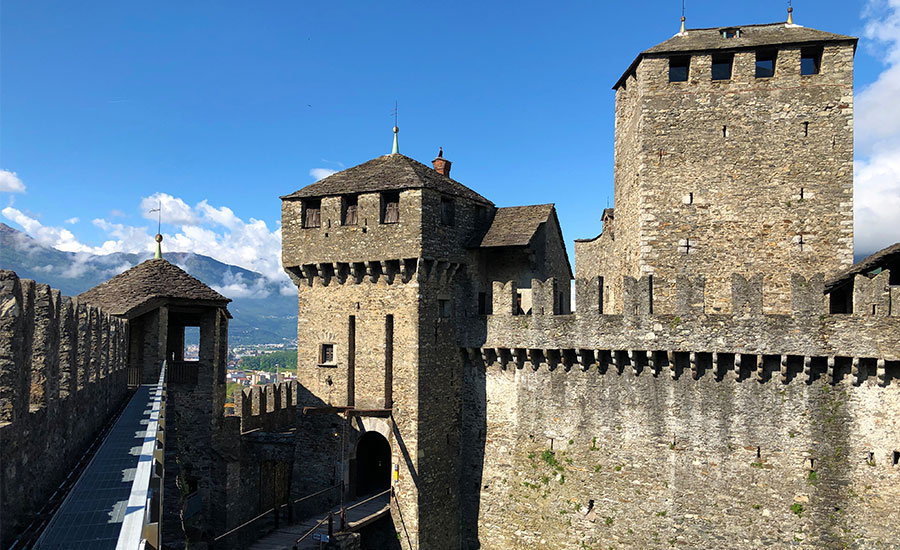
CASTELLO DI MONTEBELLO, BELLINZONA
The castle is located about 90 meters above the city level. It also stands on the hill of Montebello. The medieval complex in which it is included has been part of the UNESCO World Heritage Site since 2000. The first mention of its existence dates back to 1313, but the biggest enlargements of the structure were made between the 60s and the 90s of 1400. After changing several names, such as “Schwyz Castle” and “St. Martin’s Castle”, it was purchased by the Canton Ticino in 1903, on the occasion of the centenary of Ticino’s independence.
Today the castle houses the archaeology and history section of the Civic Museum.

PIAZZA DELLA RIFORMA, LUGANO
Its name can be attributed to the constitutional reform of 1830, and today it represents the main pole of the city of Lugano. The main building on the square is the town hall, built in the 1840s. Previously another building overlooked Piazza della Riforma: the theatre, today unfortunately demolished. Still today the square is used for the main events organized. If you pass through Lugano you cannot miss a visit to this beautiful square, the fulcrum of the whole city.
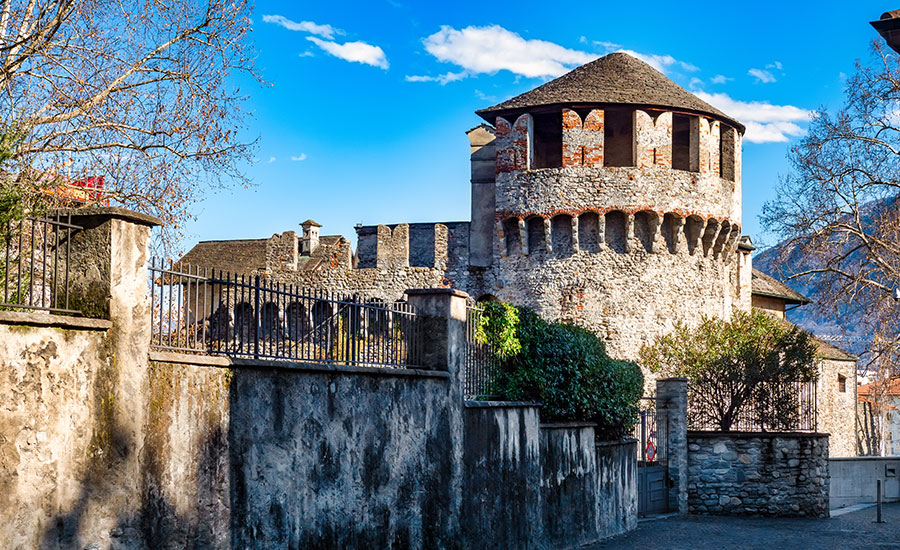
CASTELLO VISCONTEO – MUSEO CIVICO E ARCHEOLOGICO, LOCARNO
It is not easy to define precisely when it was built, but construction probably began in 1342. It was the Visconti family who conquered the castle and enlarged it for the first time. However, the most important fortification works were carried out by the Rusca family around the middle of 1400. With the victory of the confederates the castle was almost completely demolished in 1532, and its present appearance is the result of the restoration of 1923 by Edoardo Berta. Today the building is the seat of the civic and archaeological museum, famous above all for its collection of Roman glass.